
Save lives. Do more with less. Serve people in need.
“The American Red Cross prevents and alleviates human suffering in the face of emergencies by mobilizing the power of volunteers and the generosity of donors.”
-The American Red Cross
For the past 140 years, the American Red Cross has served those in need, providing services to the American armed forces, helping families affected by disasters, and more. The Red Cross mission mobilizes people of all ages and backgrounds to one cause: Saving lives.
The task? To find a suitable translation management system that’ll help the American Red Cross reach more people, offer multilingual services, and optimize their translation workflow.
Challenge
The American Red Cross spending on translation continues to grow as demand for multilingual support increases. Moreover, their translation memory and content is fragmented, spread across multiple language service providers.
The goal is to consolidate content under a TMS that can help them regain in-house control, keep costs low, and optimize their translation workflow.
Outcome
Together with Nora Arutyunyan, I evaluated three plausible TMS tools to help the Red Cross achieve their goals. This project will be presented at a later time to our real-life Red Cross Project Team.
Strategy
Understanding the Stakeholders
Before even looking at TMS tools, we first sought to understand the stakeholders, starting from those who will be using the tool: the translators. We interviewed a Red Cross volunteer translator to uncover the pains, gains, and jobs of their translators. Through this initial interview, we gained insight into what features the TMS would need and what was important to the volunteer translation team. We found that automation of workflow tasks and ease of use were key to the success of translators.
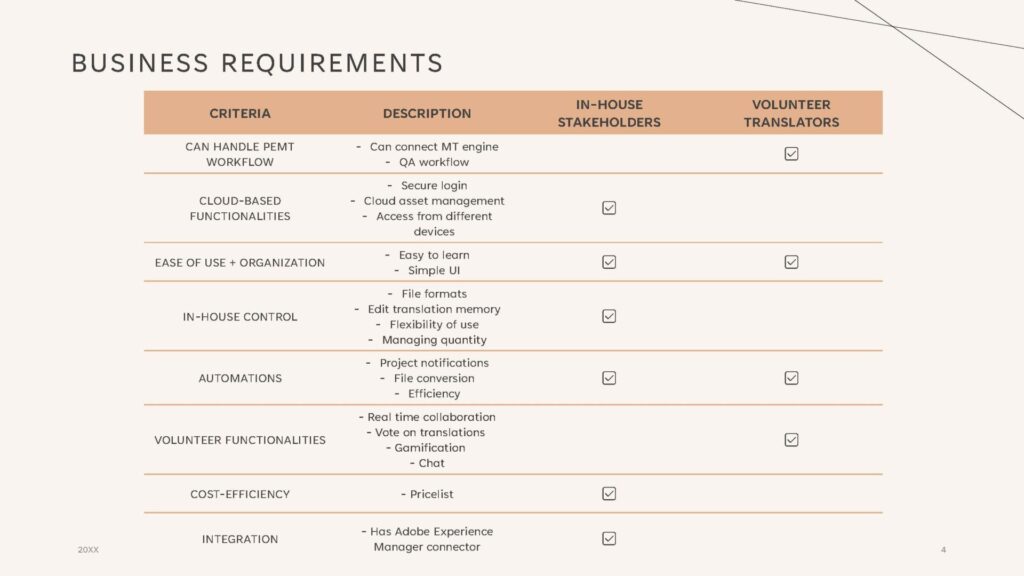
Determining the business requirements
Next, we gathered our knowledge of the Red Cross’s translation needs from a business and linguistic perspective to determine the criteria used to analyze TMSs. We also put weights on the criteria depending on how important it was to the organization’s goals.
Preliminary Research
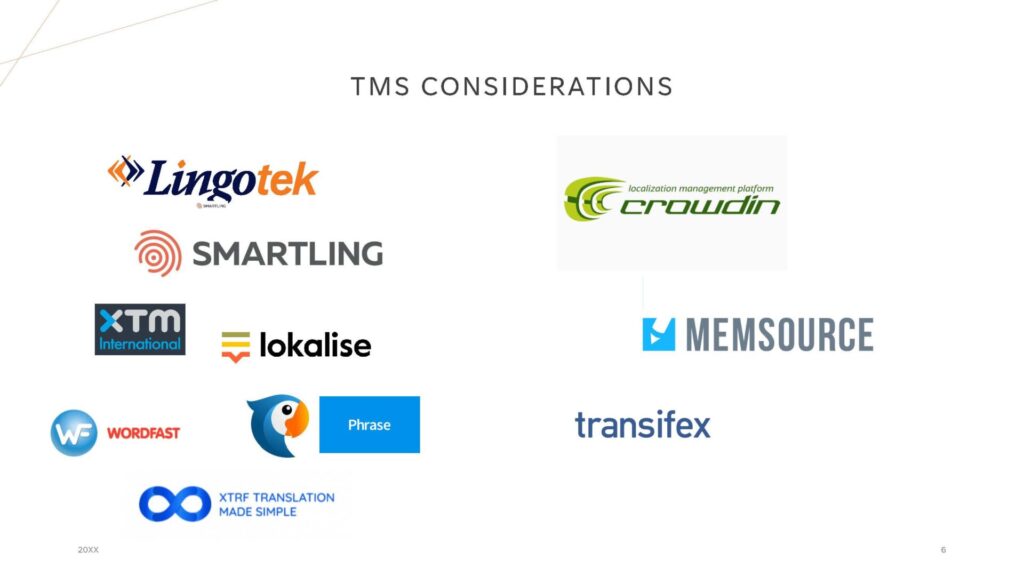
Our preliminary research started from a list of the top TMSs and others that were suggested by the TMS Project Team, and we narrowed them down to the top three we felt could best fit the criteria.
Pilot Project
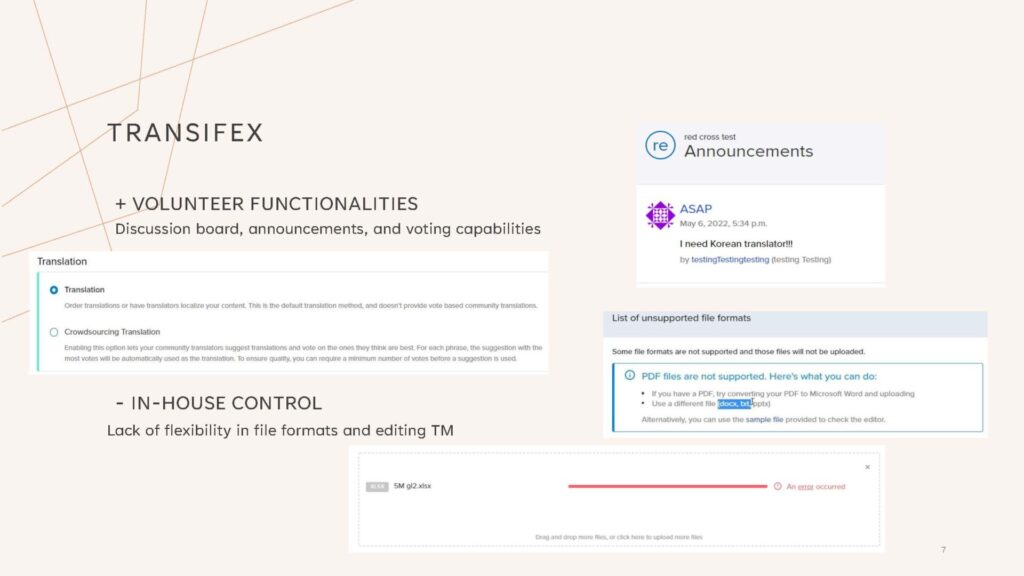
We found Transifex, Memsource, and Crowdin to be the most plausible TMS choices. We conducted a simple pilot project of translating a Word document to test out their functionalities and score the features that met the criteria we put forth.
We also decided to test out PDF documents, a common file form, to test out the TMSs because we have had issues with other TMSs in the past not accepting PDF. This format is also likely to be used at the American Red Cross.
Comparing TMS
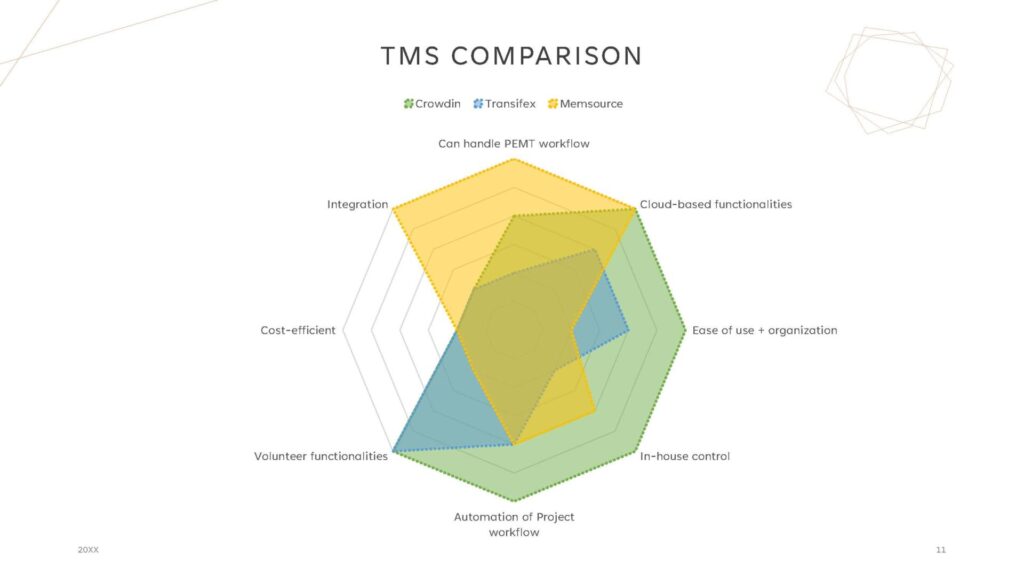
After testing out the three systems with the pilot project, we scored them based on how many criteria they fit.
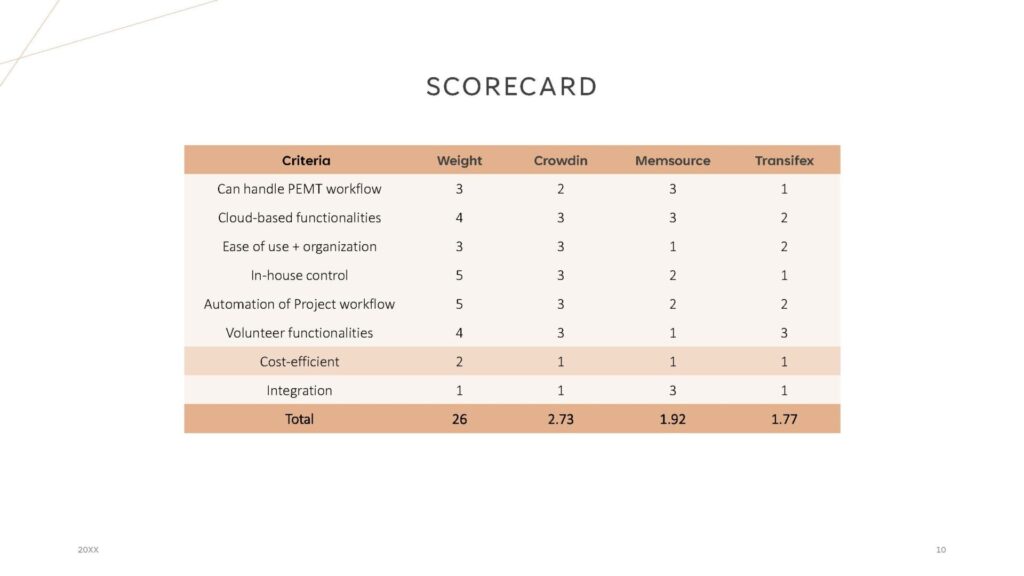
Crowdin, with its superior ease of use and organizational structure, level of in-house control, and volunteer functionalities won out. We concluded that Crowdin would be the best fit for the American Red Cross.
To be Continued
This project will continue into Summer 2022. We plan to present our findings with the rest of the Red Cross TMS Project Team and work with the team to uncover more specific business requirements from the Red Cross, as well as dig deeper into the costs involved with each TMS.
You can view our entire process here: